

Overview
The White Desert (White Desert National Park) is one of Egypt’s most surreal and mesmerizing natural wonders. Located in the Western Desert, it sits between the Farafra and Bahariya oases, roughly 500 km southwest of Cairo. Spanning around 300 square kilometers, it was officially declared a protected national park in 2002.
Sights
Info
Here is a comprehensive overview of this unique destination:
1. Geological Marvels & Phenomena
-
Remnants of an Ancient Ocean: Millions of years ago, this entire region was a vast ocean bed. As the waters receded, they left behind thick layers of limestone, chalk, and marine microorganism fossils.
-
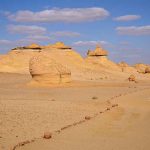
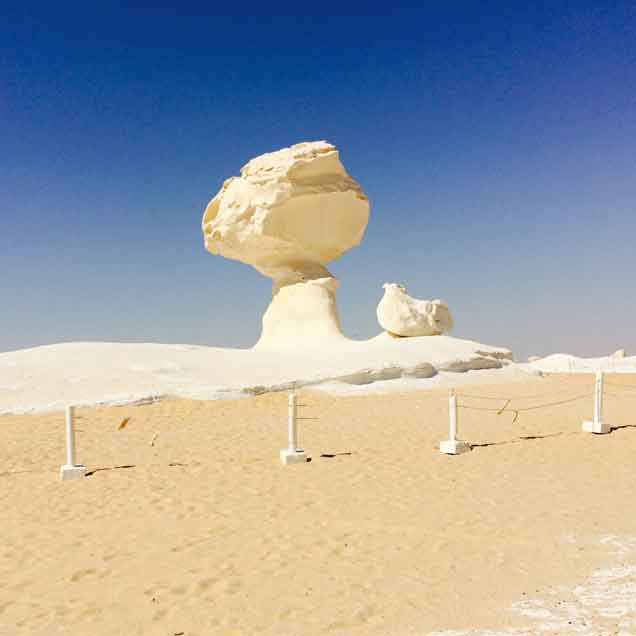
Wind-Carved Sculptures: Over millennia, relentless wind and sandstorms eroded the soft chalk, shaping it into bizarre, massive formations. These natural sculptures look like giant mushrooms, abstract pillars, and animals (the most famous being the “Chicken and Mushroom” rock).
-
The Snow Effect: Walking through the White Desert feels like stepping onto the moon or a snowy tundra. The blindingly white chalk formations contrasted against the golden desert sands create an otherworldly landscape, which glows beautifully under starlight and full moons.
2. Key Attractions & Activities
Most trips are conducted via 4×4 safari vehicles and typically include a circuit of neighboring landmarks:
-
Wadi El-Agabat: A breathtaking valley surrounded by massive white cliffs and golden sand dunes, offering some of the best panoramic views in the Western Desert.
-
Crystal Mountain: A unique, small ridge made entirely of sparkling quartz crystal formations, naturally exposed by the elements.
-
The Black Desert: Usually visited on the way into the area from Bahariya Oasis, this region features volcanic, basalt-covered hills that offer a stark, dramatic contrast to the neighboring White Desert.
-
Desert Camping & Stargazing: The highlight of any trip is spending the night in an open-air eco-camp amidst the chalk formations. With zero light pollution, it is universally recognized as one of the best spots in the world for astrophotography and viewing the Milky Way.
-
Wildlife: Despite the harsh environment, the park is home to rare wildlife, including the Egyptian gazelle and the Fennec fox (desert fox), which often peacefully wanders near tourist campsites at night looking for food.